
What Denver Homeowners Should Know About Custom Security Doors
Adding a stronger exterior door is one of the more practical upgrades a Front Range homeowner can make, and it is also one of the most misunderstood. A door that looks heavy is not always a door that resists a determined push, and a lock that feels solid in a showroom does not always hold when the frame around it gives way. For homeowners weighing their options, understanding how Denver Security Doors are actually built matters far more than the label stamped on a big-box product.
A real security door is a system. The slab, the frame, the hinges, the locking hardware, and the anchoring into the surrounding wall all work together, and the weakest of those parts sets the true limit on how much protection you get. A custom security door built for your specific opening lets a fabricator control every one of those elements rather than forcing a fixed-size product into a hole it was never measured for. That control is the difference between a door that simply looks tough and one that behaves the way you expect when it is tested.
This guide walks through what separates a custom steel door from a stock unit, how the construction resists forced entry, why fit and finish matter in Colorado's climate, and how to think through which entries on your home deserve the upgrade first. The goal is to give you enough grounding to ask sharp questions and make a confident decision, whether you are protecting a single front entry or hardening several ground-level openings across the house.
What Sets a Custom Security Door Apart From a Standard Door
The term security door covers a wide range of products, from lightweight aluminum screen models marketed as security doors to heavy welded steel units engineered to slow a forced entry. The difference between them is not cosmetic. It comes down to material thickness, how the frame is built and anchored, and how the locking points are reinforced. A stock door is manufactured to a standard size and shipped to fit an average opening, which means installers often shim it, trim it, or force it into place. A custom door is measured, drawn, and fabricated for one specific opening, so the fit is tight and the reinforcement lands exactly where your wall needs it.
The table below outlines where a custom steel door and a typical stock unit tend to diverge. Treat it as a starting point for your own questions rather than a fixed rulebook, since individual products vary widely.
Feature | Standard Stock Door | Custom Steel Security Door |
Material | Light gauge or aluminum, fixed | Heavier steel or iron, chosen for the job |
Frame | Prefit, sometimes hollow | Reinforced and anchored to the opening |
Locking | Single deadbolt, exposed | Multi-point options and protected strikes |
Fit | Adjusted to the opening on site | Fabricated to the measured opening |
Finish | Factory coating | Durable finish for Front Range weather |
Steel Construction and Frame Reinforcement
The slab, meaning the moving part of the door itself, sets the first line of resistance. A stock storm or screen door often relies on a thin aluminum skin or a light steel face over a foam core, which can be pried, punched, or peeled once someone has leverage. A custom steel door starts with heavier stock and full welds at the corners and joints, so the frame of the slab does not flex or separate when force is applied. Iron and steel bar work can be integrated into the design as well, giving the door strength through its structure rather than through a hidden internal panel that only looks solid from the outside.
The part homeowners overlook most often is the surrounding frame, and it deserves as much attention as the door. A door is only as strong as what it latches into. If the frame is hollow, poorly anchored, or made of thin material, a determined kick transfers straight to the jamb and the whole assembly gives way at the wall rather than at the lock. A reinforced steel frame anchored properly into the structural opening spreads that load across the wall instead of concentrating it at a single weak point. Building the slab and the frame together, to the same measured opening, is exactly what a custom shop can do and a mass-produced product cannot.
Locks, Hinges, and Strike Points That Resist Entry
Most forced entries do not defeat a lock cylinder. They defeat the area around it. A single deadbolt seated in a thin jamb can be forced when the wood or metal beside it splits, so the grade of the deadbolt matters less than how the strike area is reinforced. On a custom door, the strike points can be backed with heavier steel and the bolt can seat into reinforced material rather than into a shallow pocket. Adding multi-point locks spreads the holding force to several points along the height of the door, top, middle, and bottom, so pressure at any one spot no longer pops the door open.
Hinges are the other quiet vulnerability. On a door that swings outward, which many security doors do so the frame stops the slab from being pushed in, the hinge pins sit on the exterior and can be targeted. Security hinges, non-removable pins, or welded hinge details keep that edge from becoming the easy way in. A fabricator who builds the door as one piece can specify the hinge type, the number of hinges, and how they mount, matching the hardware to the weight of the steel rather than accepting whatever a factory bolted on. Every one of these details is a decision, and on a custom door you get to make it deliberately.
How a Custom Security Door Improves Home Protection
Home protection works in layers, and a strong door is one of the most reliable layers you can add because it works whether or not anyone is home, whether or not the power is on, and whether or not an alarm is armed. The first layer is deterrence. A visibly solid steel door signals that an entry will be slow, loud, and uncertain, and most opportunistic intruders move on to an easier target rather than commit to a door that clearly will not give on the first try. That deterrent value is passive and constant, and it costs you nothing in daily use once the door is installed.
The second layer is genuine resistance. If someone does attempt entry, the goal of a security door is time. Time to be noticed, time for a neighbor or camera to catch the activity, and time for the attempt to fail before it succeeds. Reinforced frames, multi-point locking, and welded steel construction turn a few seconds of effort into a prolonged and conspicuous struggle. Ground-level entries are where this matters most, since those are the doors an intruder can actually reach and work on without a ladder or a boost. A custom door lets you match the level of hardening to the real exposure of each opening rather than treating a fragile back slider and a sheltered front entry as the same problem. None of this requires a fortress mentality. It is simply about closing the easy gaps that a standard door leaves open, so your locks, lights, and any monitoring you already use have a solid physical layer to back them up.
A custom door also raises the standard of your entries in a way that compounds over time. When one opening is genuinely hardened, the others become the relative weak points, which is why many homeowners address their most exposed doors as a short sequence rather than a single purchase. Matching the level of protection across the openings that share the same exposure removes the obvious gap an intruder would look for first. A door built to your measurements also seals more tightly against the frame, and that closer fit means fewer places where a pry bar can find purchase along the edge. Security and sound construction tend to travel together, and a well-fabricated door delivers both at the same entry.
Custom Fit and Design for Denver Homes
The advantage of custom fabrication is that nothing about the door is a compromise to a catalog size. The opening is measured precisely, the door and frame are drawn to that measurement, and the finished unit seats cleanly without the gaps, shims, or forced adjustments that undermine both security and weather sealing on a stock installation. Because every custom door is drawn and built for one opening, it helps to plan ahead rather than expect an off-the-shelf turnaround. A typical custom project moves through a few clear phases. Preconstruction and measurement take about one to two weeks, shop drawings and approval another one to two weeks, fabrication roughly three to four weeks, and finishing about one week, which places most projects in a six to eight week planning range from approval to a finished door. Treat that as a planning range rather than a guarantee, since actual timing depends on scope, design complexity, finish selection, site conditions, and the current shop schedule.
Matching the Door to Your Home Style
A security door should not look like a bolt-on afterthought stuck over your entry. One of the strongest reasons to build custom is that the door can be designed to suit the architecture of your home rather than announcing itself as a piece of security equipment. Denver and Front Range homes range from modern builds to traditional brick, mountain-style timber, and older bungalows, and a made-to-order steel door can carry proportions, panel lines, and detailing that fit the house instead of fighting it. You choose the profile, the amount of open ironwork versus solid panel, the finish color, and how the door reads from the street.
That freedom also lets the door serve more than one purpose at once. A well-designed entry can add curb appeal and a sense of craftsmanship while quietly delivering the reinforcement underneath. Because the work is fabricated in house rather than pulled from a warehouse, the design can respond to what you actually want, whether that is a clean contemporary face with concealed strength or a more ornamental piece that still meets a real security standard. The look and the protection are decided together, not traded against each other.
Decorative Ironwork That Keeps Security Intact
Decorative ironwork is where a custom door earns its character, but ornamental detail only helps if it is designed with security in mind rather than bolted on for show. Scrollwork, bar patterns, and panel designs can all be part of a door that protects, provided the spacing, the bar dimensions, and the connections are engineered so the decoration does not create handholds, pry points, or gaps wide enough to reach through. A pattern that looks the same to a casual eye can be either a genuine barrier or a decorative screen, and the difference lives in the gauge of the metal and how each piece is welded into the whole.
A fabricator who controls the design can keep the artistry and the strength aligned. Bars can be sized and spaced to resist spreading, welds can be placed where stress concentrates, and any open areas can be backed or patterned so they do not become a weakness. The result is a door that reads as a designed feature of the home rather than a cage over the entry, while still doing the structural job you bought it for. You do not have to choose between a door that looks good and a door that works, because on a custom piece those goals are solved in the same drawing.
Finish and Durability for Front Range Conditions
A security door only protects your home for as long as it stays sound, and Colorado's climate is hard on exterior metal. Intense high-altitude UV fades and chalks weak coatings, wide daily temperature swings expand and contract the steel, and repeated freeze and thaw cycles work at any spot where moisture can sit. A door that rusts at the base, seizes at the hinges, or sheds its coating is not only unattractive, it is slowly losing the integrity that made it secure. Durability is therefore part of the security conversation, not a separate cosmetic one.
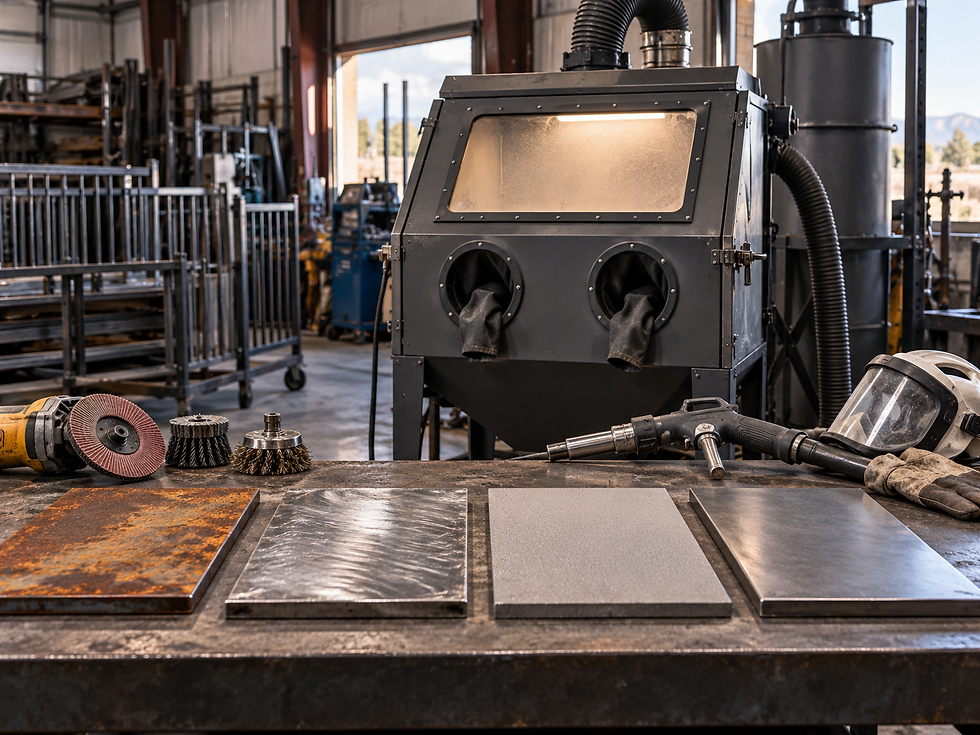
This is where in-house finishing matters. A durable applied finish such as powder coating, cured properly over correctly prepared steel, resists UV, moisture, and abrasion far better than a quick factory spray, and it keeps the door working season after season. Galvanizing is sometimes mentioned as a corrosion approach, though it is a dip-coating process used more for raw structural steel than for finished architectural doors, and it is offered here only as a point of comparison rather than as a service. What keeps a custom door sound over the long run is thorough surface preparation, a quality coating, and attention to the edges and hardware where corrosion usually starts. Building and finishing the door under one roof means that preparation and coating are controlled from bare steel to final color, without a rushed handoff that lets flash rust or contamination compromise the finish before it is even installed.
Long-term upkeep on a well-finished steel door is minimal, which is part of the value. A quality cured coating does not need the frequent repainting a lightly finished door demands, and periodic cleaning plus an occasional check of the hinges, weather seals, and locking hardware is usually enough to keep it operating smoothly for years. Catching a small chip or a sticking bolt early keeps a minor issue from turning into corrosion or a lock that no longer seats fully. Because the door was built and finished as one controlled piece, touch-ups and adjustments stay straightforward when they are eventually needed, and the door holds both its appearance and its protective function across a long service life.
Security Doors and Airflow Working Together
Security and fresh air are not opposites, and a well-planned entry can give you both. Many homeowners want the option to open the main door on a mild day and still keep the entry secure, and a custom security door can be designed with a screened or ventilated section that lets air move through while the steel structure stays locked. That is different from a lightweight storm or screen door, whose job is weather protection and airflow rather than resisting force. The two products solve different problems, and on some homes they work best as a pair, with a storm door managing weather and efficiency and a security door handling protection. If ventilation and weather sealing are your main concern, a purpose-built storm door is the better tool for that specific job, and it can be planned to work alongside a security door on the same opening. The point is that choosing a security door does not mean sealing your entry into a solid slab with no airflow. The design can be shaped around how you actually live, with the balance of open area and solid structure decided during the drawing stage so you keep both the protection and the comfort you want.
Choosing the Right Security Door for Your Entry Points
Not every door on a house carries the same risk, and a smart plan starts by looking at each entry the way someone testing your home would. Front entries are visible and often the most reinforced already, but they are also the most public face of the house, so protection and appearance both matter there. Back and side doors are frequently the real weak points, since they are shielded from the street, sit near fences or landscaping that offer cover, and often came with the builder's lightest hardware. Basement walk-out doors and lower-level entries deserve particular attention because they are close to grade, out of sight, and easy to work on unobserved.
As you walk your home, it helps to weigh a few practical factors for each opening before deciding where a custom door delivers the most value.
• How visible the entry is from the street and from neighbors
• Whether the door is single or double, and how wide the opening is
• How much cover from fences, plants, or corners shields that entry
• How often you use the door and whether you want airflow there
Usage guides the specification as much as risk does. A door you pass through many times a day needs hardware that is easy to operate without feeling flimsy, while a rarely used basement egress might prioritize raw resistance over convenience. Single and double configurations, the width of the opening, and whether a sidelight or transom sits beside the door all shape what the fabricated unit needs to be. Working through your entries this way, rather than defaulting to the front door alone, is how you get protection that matches your home instead of a one-size answer that leaves the actual weak points untouched.
If you are unsure where to begin, a walkthrough with a fabricator can help you see your entries the way a professional does. Someone who builds these doors can point out which openings carry the most exposure, where a frame will need extra reinforcement, and how a double door or an adjacent sidelight changes the approach. That kind of assessment turns a vague sense that the house could be more secure into a clear, prioritized plan, so your budget goes toward the openings that actually move the needle. It also means the doors you commission are specified correctly from the start, matched to each opening rather than ordered on a guess.
When you are ready to protect an entry with a door built specifically for it, Denver Railings & Metal Art is ready to help. We are a family-owned shop, and we fabricate and finish every custom security door in house at our Strasburg facility east of Denver, from the first measurement through welding, sandblasting, and the final coat. That means we control the fit, the reinforcement, and the finish rather than reselling someone else's product. Call us at (720) 277-3534 or email sales@denverrailings.com to talk through your entries, your priorities, and the look you want. We will walk you through your options, take accurate measurements, and prepare a clear quote so you know exactly what your door includes before any steel is cut.
Frequently Asked Questions
1. What makes a custom security door more secure than a store-bought one?
A store-bought door is built to a standard size and shipped to fit an average opening, so it often relies on a single deadbolt, a light slab, and a frame that was never matched to your wall. A custom security door is measured, drawn, and fabricated for one specific opening, which lets the builder control the steel thickness, reinforce the frame where it anchors into the structure, and add multi-point locking and protected strike points. Because the slab and the frame are built together and installed without shims or forced adjustments, the whole assembly holds up to force far better than a product that was compromised to fit before it ever reached your door.
2. Are custom security doors in Denver made from steel or iron?
Both steel and iron are used, and the right choice depends on the design and the level of protection you want. Steel offers excellent strength for the slab and frame and takes a durable finish well, which is why it is common for security doors that need to resist force and weather. Iron is often chosen when ornamental detailing is part of the design, since it can carry decorative bar work and scroll patterns while still forming a real barrier. On a custom door the two can be combined, using steel for structure and ironwork for the design elements, so you get both the security and the look you are after rather than settling for whatever a catalog offers.
3. Can a security door look decorative and still protect my home?
Yes, and that is one of the main reasons homeowners choose custom over a stock unit. Decorative ironwork only strengthens a door when the bar dimensions, spacing, and welds are engineered so the detailing does not create handholds, pry points, or gaps wide enough to reach through. Designed correctly, scrollwork and panel patterns become part of a genuine barrier rather than a decorative screen. Because the door is drawn and fabricated as one piece, the appearance and the protection are decided together, so you get a door that suits your home's architecture and adds curb appeal while still delivering the reinforcement underneath. The look and the strength are solved in the same design.
4. Will a custom security door hold up to Denver weather?
A custom door is well suited to Front Range conditions when it is finished properly. High-altitude UV, wide temperature swings, and repeated freeze and thaw cycles are hard on exterior metal, so durability is part of the security, not just the appearance. Thorough surface preparation followed by a quality cured finish such as powder coating resists fading, moisture, and corrosion far better than a light factory coating, and careful attention to edges and hardware keeps rust from starting where it usually does. Finishing the door in house, over correctly prepared steel, means the coating is controlled from bare metal to final color so the door stays sound and secure through many Colorado seasons.
5. Can a security door also provide ventilation like a storm door?
A security door can be designed with a screened or ventilated section so you can open your main door on a mild day and still keep the entry locked and protected. That is different from a storm door, whose primary job is weather protection, efficiency, and airflow rather than resisting force. The two products solve different problems, and on many homes they work well as a pair, with a storm door managing weather and a security door handling protection on the same opening. If airflow and weather sealing are your main goals, a purpose-built storm door is the better tool, and it can be planned to work alongside a security door so you get both comfort and protection.
6. How do I request a custom security door quote from Denver Railings & Metal Art?
Getting started is simple. Call Denver Railings & Metal Art at (720) 277-3534 or email sales@denverrailings.com to describe the entries you want to protect, how each one is used, and the look you have in mind. The team can arrange accurate measurements of your openings, review design and finish options with you, and prepare a clear quote that lays out exactly what your door will include. Because every door is fabricated and finished in house at the Strasburg shop east of Denver, the fit, the reinforcement, and the finish are all controlled in one place, so the quote reflects the actual door you will receive rather than an off-the-shelf estimate that changes at installation.


Comments