
How Custom Metal Fencing and Deck Railing Work Together on a Property
When you look at a property from the street or the backyard, your eye does not separate the fence at the boundary from the railing on the deck. It reads the metalwork as a whole. That is why the smartest approach to Metal Fencing Denver projects treats perimeter fencing and deck railing as parts of one design rather than two purchases made months apart from different sources. When the two are planned together, they frame the property, guide movement through it, and protect the people using it, all while looking like they were always meant to be there.
Most homeowners come to this question from one side or the other. Either the deck is getting rebuilt and the railing needs replacing, or a new fence is going in along the property line and the old deck rail suddenly looks dated next to it. In both cases the missed opportunity is the same. Fencing and railing that are chosen in isolation almost never match. The picket profiles differ, the top rails sit at different heights, the finishes age at different rates, and what could have been a clean, continuous look ends up feeling stitched together. Planning both at once avoids that, and it usually causes far less friction than fixing a mismatch later.
This guide walks through how custom metal fencing and deck railing function as a single system on a Front Range property. You will see why they belong to the same design, how to match materials and finishes across both, how each element still does its own job, how to handle the transitions where a fence meets a deck or a set of stairs, and why having one shop fabricate everything keeps the whole thing consistent. The goal is a property where the metalwork looks intentional from every angle and holds up to Denver conditions for the long run.
Why Fencing and Deck Railing Belong to the Same Design
A property is experienced as a sequence, not a set of separate objects. You walk up to a gate in the fence, cross the yard, step onto the deck, and climb the stairs, all within a few seconds. If the metalwork changes character at each of those points, the property feels disjointed even when every individual piece is well made. When the fence, the deck railing, and the stair railing share a visual language, the whole place reads as considered and coherent. That coherence is what people notice first, even if they cannot name why one yard looks polished and another looks assembled from parts.
The functional case is just as strong as the visual one. Fencing and deck railing both define edges and manage how people and pets move through a space. A fence keeps the perimeter secure and marks the boundary, while a deck railing keeps anyone on an elevated surface from a fall. When you design them together, you can make deliberate decisions about sightlines, about where a gate opens onto a path, and about how the railing at the top of the deck stairs lines up with the fence beyond it. Those relationships are hard to get right when each piece is specified separately by a different installer working to a different plan.
There is a durability argument for treating the two as one system as well. Metal that is fabricated in the same shop, from the same stock, and finished in the same process ages at the same rate. A fence and a railing that started life together will weather together, so you do not end up with one element looking tired while the other still looks new. On the Front Range, where intense sun, wind, and freeze-thaw cycles put every outdoor surface under stress, matched aging keeps a property looking maintained rather than patched over years of separate repairs.
None of this requires that the fence and the railing be identical. In fact, they should not be, because they do different jobs and sit in different places. The point is that they should clearly belong to the same family. The relationship is closer to matching the trim throughout a house than to using the exact same part twice. Once you see fencing and railing as members of one design family, the rest of the decisions, from material to finish to detailing, start to line up naturally instead of fighting each other.
Matching Materials Across Fencing and Railing
The first place cohesion is won or lost is material. Custom metalwork on a Front Range property is usually built from steel, wrought iron, or aluminum, and each behaves differently in terms of strength, weight, and how it takes a finish. When your fencing and your deck railing are made from compatible materials, they respond to weather the same way and carry a consistent visual weight. When they are not, the mismatch shows up quickly, both in how the two elements look side by side and in how they hold up over time.
Steel is the workhorse of custom fencing and railing because it offers high strength for its size, welds cleanly, and holds intricate detail. A steel fence and a steel deck railing can share the same stock dimensions, the same picket thickness, and the same structural approach, which is what makes them look like siblings rather than strangers. Wrought iron brings a heavier, more traditional character and suits homes with ornamental detailing, and it can be carried across both the fence and the railing for a unified classic look. Aluminum is lighter and naturally corrosion resistant, which appeals to some homeowners, though it reads differently under the hand and eye than steel or iron.
The material conversation is not only about picking one. It is about avoiding an accidental mix that undermines the design and, in some cases, the metal itself. Pairing dissimilar metals that touch, such as an aluminum railing bolted directly to a steel fence bracket, can invite galvanic corrosion where the two meet, which quietly shortens the life of the connection. A shop that plans the fence and the railing together designs those junctions correctly from the start, isolating dissimilar metals where needed or, more often, keeping the whole system in one compatible material so the problem never arises at all.
Structural match matters as much as the surface. A boundary fence and an elevated deck railing face different loads, but if they are going to look related, their framing needs to be proportioned so the eye accepts them as a pair. A railing built from noticeably thinner stock than the fence beside it will look flimsy by comparison, and a fence built far heavier than the railing can make the deck feel like an afterthought. Getting the proportions to agree is one of the quieter benefits of designing both elements at once, and it is a big part of why custom work outperforms mixing off-the-shelf pieces from different suppliers.
Keeping Style and Finish Consistent
Once material is settled, style and finish are what actually make two separate structures look like one. Style covers the shapes and proportions the eye picks up from a distance, the rhythm of the pickets, the line of the top rail, and the way posts punctuate a run. Finish covers color and surface, the coating that both protects the metal and sets its tone. When these carry across the fence and the deck railing, the property gains the visual continuity that makes custom work feel finished. When they drift, even matched materials can end up looking mismatched.
Picket, Post, and Top-Rail Detailing
The detailing is where a design language is written. Picket spacing and profile, whether the balusters are square or round, plain or capped, set a rhythm that the eye tracks along a fence and up a stair. Carrying that same rhythm onto the deck railing is what ties the two together. If the fence uses a particular picket spacing and a flat top rail with a subtle cap, echoing those choices on the railing makes the deck feel like a continuation of the yard rather than a separate zone bolted onto the house.
Posts and top rails do a lot of this work because they are the strongest lines in the composition. A post cap detail repeated from the fence corners to the deck stair newels, a top rail with the same cross-section running along both, and a matching kick or bottom rail near the ground are the repeated elements a designer uses to stitch a property together. None of it has to be ornate. Even a very clean, modern fence and railing can look unified simply by holding the same proportions and the same handful of details across every run. The discipline of repetition is what separates a custom system from a collection of parts.
Color and Finish Continuity
Color is the most immediate signal of whether two pieces of metalwork belong together, and it is where a shared finish earns its keep. A fence and a railing coated in the same color, with the same sheen and the same texture, read as one system even when their shapes differ. Powder coating is the common route for this because it lays down a consistent, durable color across every part run through the same line, which is far harder to guarantee when pieces are finished at different times in different places. The point here is continuity rather than a deep dive into coatings, so the finish stays a supporting player in the larger design.
There is a practical payoff to finish continuity beyond looks. When the fence and the railing wear the same coating applied the same way, they weather at the same pace and take maintenance on the same schedule, which keeps the property from developing that patched look where one element has faded and another has not. A shared decorative finish is also different from a coating chosen purely for raw corrosion protection, such as hot-dip galvanizing, which serves as a comparison method rather than the unifying architectural finish most homeowners want across a fence and a deck rail. For a cohesive property, a matched color and surface across both elements is what carries the design.
How the Two Elements Serve Different Functions
Belonging to the same design does not mean doing the same job. A fence and a deck railing look related on purpose, but they answer to different demands, and a good design respects that. The fence works at ground level around the property, while the railing works at height on the deck and stairs, and the requirements at each location are not the same. Understanding the split is what lets you unify the appearance without compromising either function, which is the balance a combined design is meant to strike.
Element | Primary Job | Main Requirement |
Metal fencing | Perimeter, boundary, and security | Coverage, height, and secure gate points |
Deck railing | Fall protection at elevation | Code-driven height and infill spacing |
Stair railing | Safe movement between levels | Graspable rail and consistent geometry |
Fencing for Perimeter and Boundary
Fencing does its work along the ground, tracing the property line and controlling access to the yard. Its priorities are coverage, a height that suits the purpose, and secure points where gates open. A perimeter fence marks where your property begins, discourages casual entry, contains pets and children, and gives the yard a defined edge. Because it runs across grade changes, along slopes, and around corners, a fence has to be planned to follow the land while keeping a level, consistent top line, which is a fabrication challenge that off-the-shelf panels rarely handle well on a real Front Range lot.
Security and boundary definition are the practical heart of what a fence delivers, and custom fabrication lets you tune both without sacrificing the look you want to share with the deck railing. Picket spacing tight enough to keep pets in, a height matched to the purpose, and gate hardware built to last are all decisions made at the fence, not the railing. The fence can carry the same visual language as the deck rail while still being specified for the very different demands of a ground-level perimeter, which is exactly what separate off-the-shelf products cannot promise.
Deck Railing for Elevation and Code
Deck railing answers to a different master, because the moment a walking surface is elevated, fall protection becomes a code requirement rather than a preference. Guard height and the spacing of the infill are governed by building code, and those rules exist because a railing at height is a life-safety component. This is the clearest example of why a railing cannot simply be a shorter version of the fence. It has to meet specific height and spacing standards, resist a required load, and provide a secure barrier at the edge of a drop, all while still matching the fence in appearance.
On stairs, the railing takes on the added job of a graspable handrail, and the geometry has to stay consistent as the run climbs. Because these requirements are strict, the deck railing often sets the technical baseline that the fence then visually matches, rather than the other way around. Designing both together means the code-driven railing and the boundary-driven fence can share a look while each is engineered for its own duty, which is precisely the kind of problem a custom shop is built to solve on a single set of drawings.
Planning Transitions Where Fence Meets Deck and Stairs
The places where fencing and railing meet are where a combined design proves itself. A property is rarely a clean rectangle with the fence on one side and the deck on the other. More often the fence runs up to the deck, a gate sits in the fence line near the stairs, the deck railing turns and descends alongside a set of steps, and the grade shifts under all of it. These transitions are where mismatched, separately purchased metalwork looks the worst, and where a unified plan looks the best.
Thinking through the transitions in advance means deciding how each junction is handled before anything is fabricated. The main points that usually need attention on a Front Range property include the following.
• The gate in the fence line and how its style and height align with the deck railing beyond it
• The point where a fence ties into a deck post or the house structure
• The deck stair railing and how its angle and details carry down from the deck guard
• Level changes and grade, where the fence steps down a slope while the railing holds a code-height line
Each of these junctions is a small design decision that adds up to a big difference in the final look. A gate that echoes the deck railing pattern, a clean connection where the fence meets the deck framing, and a stair rail that clearly descends from the same family as the guard above it are the details that make a property feel designed rather than assembled. When one shop handles the whole scope, the transitions are drawn once, measured once, and fabricated to fit, so the pieces actually meet the way the plan intended.
Grade is the transition that trips up the most projects on the Front Range, where lots are rarely flat. A fence has to step or rake to follow a slope while the deck railing holds a level, code-driven line, and the spot where those two logics meet needs to be resolved on purpose. A shop that plans the fence and railing together can design that meeting point so it looks deliberate, keeping top lines and picket rhythms in agreement even as the ground moves beneath them. That is the kind of detail that only gets solved cleanly when both elements sit on the same drawings from the start.
The Advantage of One Denver Shop Fabricating Both
Everything about a unified fence and railing gets easier when a single shop designs, fabricates, and finishes the whole system. The match is not left to chance across two vendors and two schedules. One team takes the measurements, draws the fence and the railing on the same plan, cuts the same stock for both, and runs every piece through the same finishing process. That is how you get a fence and a deck railing that truly look like one design instead of two products that happen to share a yard.
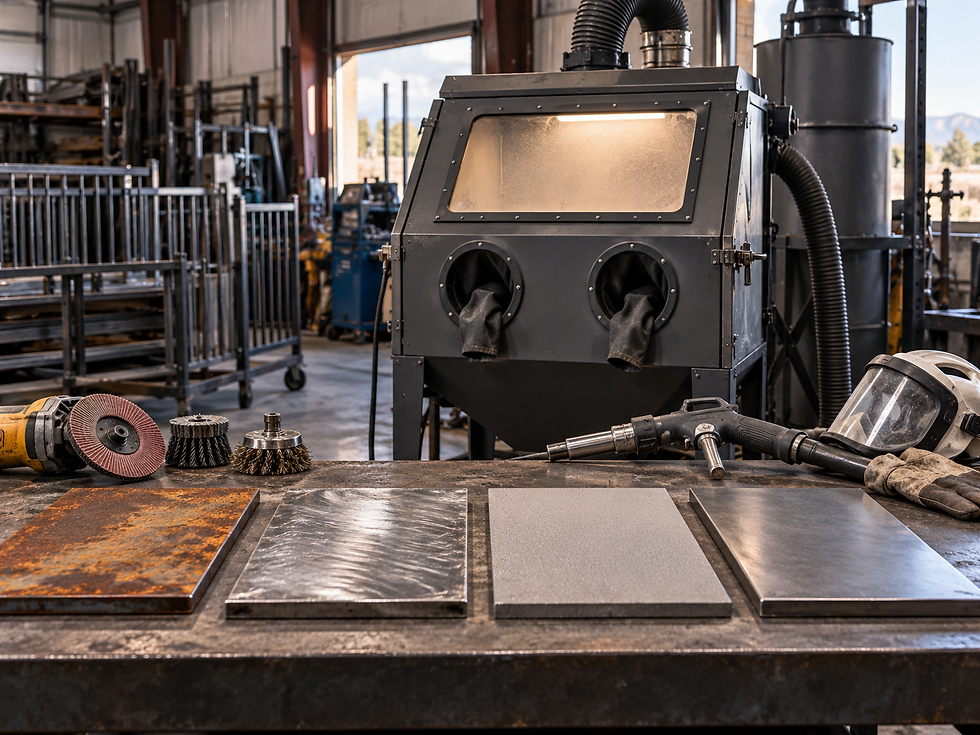
As a long-established Denver metal shop with in-house fabrication and finishing, Denver Railings & Metal Art keeps the entire process under one roof at its Strasburg facility, including its own CNC laser cutting, sandblasting, and powder-coat oven. That control is what makes cohesion reliable. When the same hands cut, weld, and coat both the fence and the railing, the picket profiles match because they were cut from the same program, the welds share the same quality, and the color is identical because every part was coated on the same line. A shop that outsources part of that chain cannot promise the same result, because each handoff is a chance for the match to drift.
Handling both elements together also removes the coordination headaches that come with splitting the work. There is one point of contact for the measurements, one design conversation, and one finishing schedule, so the fence and the railing are ready to install as a matched set rather than arriving from different sources at different times. It also means the tricky transitions where fence meets deck and stairs are engineered as part of one plan rather than negotiated between two contractors standing on the site trying to make unrelated parts fit.
When a combined fencing and deck railing project moves forward, it helps to plan around a realistic range rather than a rushed promise. A custom project like this typically spans about 6 to 8 weeks overall, with roughly 1 to 2 weeks of preconstruction and planning, 1 to 2 weeks for shop drawings, 3 to 4 weeks of fabrication, and about a week for finishing. Treat that as a planning range rather than a guarantee, because actual timing depends on the scope of the work, the design complexity, the finish selected, the site conditions, and the current shop schedule. Building both the fence and the railing in one coordinated run is often more efficient than commissioning them separately, since the design, cutting, and finishing happen once for the whole system instead of twice.
Talk With Denver Railings & Metal Art About Fencing and Deck Railing
At Denver Railings & Metal Art, we design custom metal fencing and deck railing as one connected system so your property looks intentional from the street to the top of the stairs. Our in-house team at the Strasburg shop measures, fabricates, and finishes everything ourselves, from CNC laser cutting to our own powder-coat oven, which is how we keep the fence and the railing truly matched in material, style, and finish.
If you are planning a new fence, a new deck railing, or both at once, we would like to help you plan them together from the start rather than fix a mismatch later. Call us at (720) 277-3534 or email sales@denverrailings.com to talk through your property, and learn more about our custom metal fencing and deck railing work. We will help you turn a collection of separate pieces into one cohesive design built to hold up to the Front Range.
Frequently Asked Questions
1. Should my metal fence and deck railing match in Denver?
They do not have to be identical, but they should clearly belong to the same design family. Your eye reads the metalwork on a property as a whole, so when the fence and the deck railing share materials, picket profiles, and finish color, the property looks intentional and polished. When they are chosen separately, the mismatch in profile, height, and finish tends to stand out. Planning both together is the surest way to get a cohesive look, and it still lets each element be specified for its own job.
2. Can the same shop fabricate both my fencing and deck railing?
Yes, and having one shop handle both is the most reliable way to make them match. A single fabricator can take one set of measurements, draw the fence and railing on the same plan, cut both from the same stock, and finish every part in the same process. That shared control is what keeps the picket profiles, welds, and color consistent across the whole system. When the work is split between vendors, each handoff is a chance for the match to drift, which is exactly what a unified design is meant to prevent.
3. Do fencing and deck railing use the same materials and finishes?
They can, and for a cohesive property they usually should. Steel, wrought iron, and aluminum are all common choices, and carrying one compatible material across the fence and the railing keeps them looking and aging alike. A shared finish, applied the same way, keeps the color and surface consistent so the two elements weather on the same schedule. Mixing dissimilar metals where they touch can invite corrosion at the connection, so a shop that plans both together designs those junctions correctly or keeps the whole system in one material.
4. How do fencing and deck railing serve different purposes on a property?
Fencing works at ground level to mark the boundary, secure the perimeter, and contain pets and children, while deck railing works at height to prevent falls from an elevated surface. Because the deck railing is a life-safety component, its height and infill spacing are governed by building code, whereas the fence is specified more for coverage, boundary, and security. A good combined design lets the two share a look while each is engineered for its own demands, so the railing meets code and the fence does its boundary job without either one compromising the other.
5. How are transitions handled where a fence meets a deck or stairs?
The transitions are planned in advance as part of one design rather than improvised on site. That includes the gate in the fence line, the point where the fence ties into the deck or the house, the stair railing that descends from the deck guard, and the grade changes where a fence steps down a slope while the railing holds a level line. When one shop drives the whole scope, those junctions are drawn, measured, and fabricated to fit, so the fence, deck railing, and stair railing actually meet the way the plan intended and look deliberate where they join.
6. Does matching fence and railing add value to a Denver property?
A unified fence and railing tends to strengthen curb appeal, which is one of the first things people notice about a home, and it signals that the property has been cared for with intention rather than pieced together over time. Matched metalwork that weathers at the same rate also stays looking maintained longer, since you avoid the patched appearance of one element fading ahead of another. Rather than quoting a figure, it is reasonable to say that cohesive, durable custom metalwork supports the impression of quality that buyers and guests respond to.
7. How do I plan a combined fencing and deck railing project with Denver Railings & Metal Art?
Start by calling Denver Railings & Metal Art at (720) 277-3534 or emailing sales@denverrailings.com to describe your property and what you have in mind. The team can discuss your fence line, your deck and stairs, and how you want them to work together, then arrange measurements and a design conversation. Because fabrication and finishing happen in-house at the Strasburg shop, the fence and railing are planned, cut, and coated as one matched system. Reaching out is the first step toward a single cohesive plan for the whole property.


Comments